The short answer
Insulating a loft conversion costs more than a cold loft because the insulation goes at the roof slope, not the floor, to keep the new room warm. Expect roughly £40 to £80 per square metre of insulated roof area, depending on whether rigid PIR board or mineral wool is used and how much depth the rafters allow. A loft conversion must meet Part L of the Building Regulations for thermal performance, so the insulation is part of the wider conversion cost rather than a standalone job. Material choice, rafter depth and whether you insulate above or between the rafters all move the figure.
A loft conversion turns cold roof space into a heated room, which changes where and how you insulate. Here is what that costs and why it differs from insulating a normal loft.
Loft conversion insulation at a glance
- Typical rate£40–£80/m² of roof
- Insulation locationAt the roof slope (warm roof)
- Common materialsRigid PIR board, mineral wool
- RegulationPart L Building Regulations
- Cold loft, by contrast£5–£12/m² at the floor
Why a conversion is insulated differently
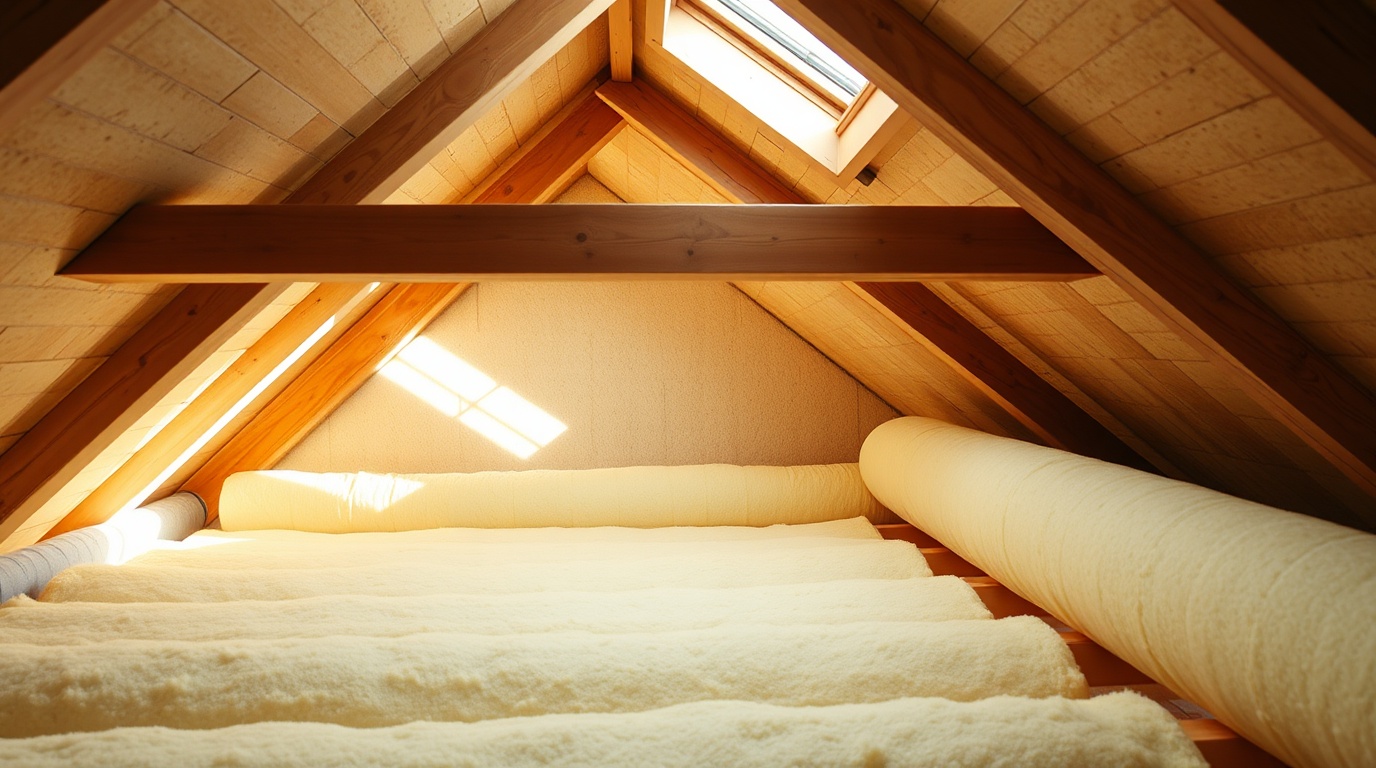
In an ordinary loft, insulation sits on the floor (across the ceiling joists) because the roof space above is cold and unused — a cold roof. A loft conversion makes the roof space a habitable room, so the insulation has to move to the roof slope to keep that room warm. This is a warm roof arrangement, and it is more involved: the insulation must fit between and often over or under the rafters, with attention to ventilation and to avoiding condensation within the roof build-up.
Because rafters are usually shallower than the insulation depth needed, installers commonly combine rigid PIR board (which insulates more per millimetre) with careful detailing, or build out the rafters to gain depth. That extra material and labour is why the per-square-metre cost is several times that of laying mineral wool on a loft floor.
What the cost depends on
The insulation is one line in a larger conversion budget, but on its own the figure moves with material choice, the roof area, and how much depth the existing rafters provide.
| Approach | Typical rate | Notes |
|---|---|---|
| Between/under rafters — mineral wool + board | £40–£60/m² | Common where rafter depth allows |
| Rigid PIR board (warm roof) | £50–£80/m² | Higher R-value per mm, saves headroom |
| Cold loft (for comparison) | £5–£12/m² | Floor-level mineral wool, no room above |
Indicative UK figures for guidance, 2026. Conversion insulation is usually priced within the whole project, not separately.
Building Regulations and the bigger picture
A loft conversion is notifiable building work, so the insulation must satisfy Part L of the Building Regulations (conservation of fuel and power), alongside Part B for fire safety and structural requirements. The building control process checks that the roof achieves an acceptable U-value, which in practice sets the minimum insulation specification. This is why you cannot simply lay loft rolls and call a conversion insulated — the warm-roof build-up has to be designed to perform and to manage moisture.
Because the insulation is embedded in the conversion, it is usually most economical to specify and fit it as part of the main works rather than as a later retrofit. The 0% VAT relief on energy-saving materials can apply to qualifying insulation, but a loft conversion as a whole is a construction project with its own VAT treatment, so the relief does not blanket the entire job. If your goal is energy saving rather than extra living space, insulating the existing cold loft floor at 270mm is far cheaper than converting — conversion costs are driven by creating a room, not by the insulation alone.
Insulating the walls, floor and dormers too
The roof slope is the most visible part of the job, but a habitable loft needs insulation in several places, and each adds to the figure. The vertical walls at the sides (often called dwarf or knee walls) and any dormer cheeks and roofs all have to be insulated to keep the room warm, as does the floor where it meets unheated areas. Small triangular voids behind the knee walls are typically insulated and ventilated so the room stays warm without trapping moisture in the cold zone behind.
This whole-envelope approach is why a conversion's insulation cost is best understood as a system rather than a single rate. A designer or builder works out the build-up for each element — roof, walls, dormers and floor — to hit the required U-values while preserving headroom and managing condensation risk with appropriate vapour control and ventilation. For a homeowner, the takeaway is that a conversion quote should make clear that insulation is included throughout the new room's envelope, not just at the main roof slope, and that the design has been signed off through building control. Getting this right at the build stage is far cheaper than discovering a cold spot or a condensation problem after the room is plastered and decorated.
Frequently asked questions
Why does a loft conversion cost more to insulate than a normal loft?
Because the insulation goes at the roof slope to keep the new room warm, using rigid boards or built-out rafters and careful detailing. A cold loft just needs mineral wool on the floor, which is far cheaper and simpler.
What insulation is used in a loft conversion?
Commonly rigid PIR board, sometimes combined with mineral wool between the rafters. PIR is popular because it insulates more per millimetre, saving precious headroom in the new room while meeting Part L.
Does a loft conversion need Building Regulations approval?
Yes. A loft conversion is notifiable work that must meet Part L for thermal performance and other parts for fire and structure. Building control checks the roof's U-value, which sets the insulation specification.
Sources & further reading
Figures on this page are typical UK ranges drawn from published sources and depend on your specific loft. They are guidance, not a quotation.