The short answer
The current UK recommendation for mineral wool loft insulation is around 270mm (roughly 270–300mm). That's because once you're laying insulation it costs little more to go to the full depth, and the extra thickness keeps far more heat in. It's usually fitted in two layers: a first layer of about 100mm laid between the ceiling joists, then a second thicker layer laid across the joists to reach 270mm and cut the cold bridge through the timber. If you have an older home with only 100mm or less, topping up to 270mm is one of the most cost-effective upgrades you can make. A warm-loft (rafter-level) approach uses different, thinner rigid boards and is a separate, more involved job.
Depth matters more than people expect — thin or patchy insulation leaves a lot of heat escaping. Here's the standard, how it's laid, and the cases where a different approach is used.
Loft insulation depth
- Recommended depth~270mm mineral wool
- First layer~100mm between joists
- Second layeracross joists to 270mm
- Older homes often have100mm or less
- Lifespan~40 years if kept dry
Why 270mm — and how it's laid
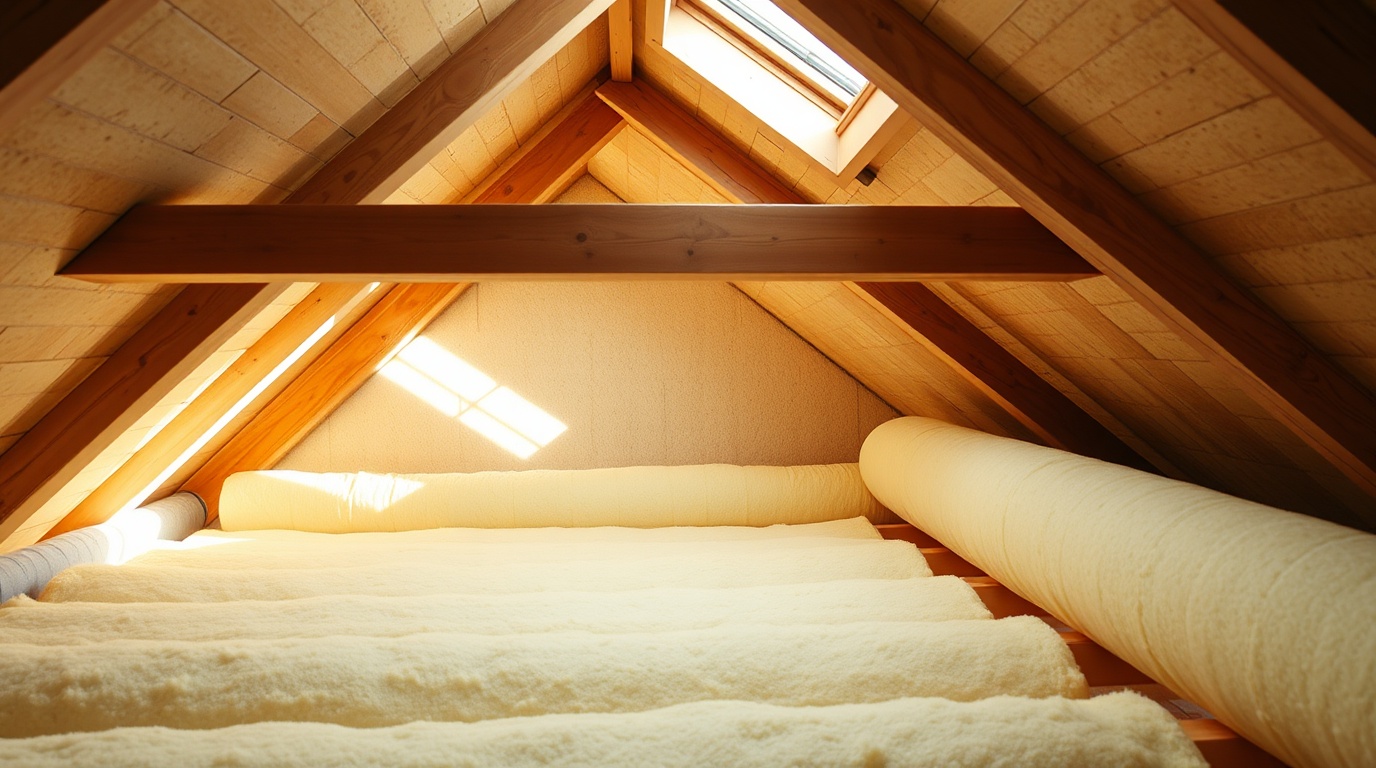
Modern UK guidance settles on roughly 270mm of mineral wool at loft (ceiling) level. The reasoning is simple: the access and labour are largely fixed, so going to the full recommended depth captures most of the available saving for little extra material. It's typically laid in two directions — a first roll of about 100mm between the joists, then a thicker second layer laid at right angles across them. Cross-laying matters because it covers the timber joists, which otherwise act as a cold bridge letting heat through.
| Layer | Depth | Direction |
|---|---|---|
| First layer | ~100mm | between the joists |
| Second layer | ~170mm | across the joists |
| Total | ~270mm | full recommended depth |
Typical two-layer mineral wool build-up. Source: Energy Saving Trust roof and loft insulation guidance.
When a different approach is used
Laying 270mm at ceiling level keeps the loft itself cold — fine for an unused loft, but it means you shouldn't squash the insulation flat with boarding or storage, as compressing it cuts its performance and you lose ventilation. If you want a usable, warm loft room, insulation is instead fitted at rafter level using rigid boards or a warm-roof build-up, which is a more involved, costlier job and a different specification. Whichever route, the loft must stay ventilated so moist air can escape — blocking the eaves vents is a common cause of condensation.
Frequently asked questions
How thick should loft insulation be?
The current UK recommendation is around 270mm of mineral wool, usually laid in two layers — about 100mm between the joists and a thicker second layer across them to reach 270mm and cover the cold bridge through the timber.
Can I just add more on top of old insulation?
Yes. If your loft has 100mm or less, an installer lays additional insulation across the joists to bring it up to 270mm — one of the most cost-effective upgrades. The existing layer usually stays in place if it's dry and in good condition.
Can I board over loft insulation for storage?
Not by squashing it — compressing 270mm flat ruins its performance and can block ventilation. Use raised loft boarding that keeps the full depth uncompressed underneath, and keep the eaves vents clear.
Sources & further reading
Figures on this page are typical UK ranges drawn from published sources and depend on your specific loft. They are guidance, not a quotation.