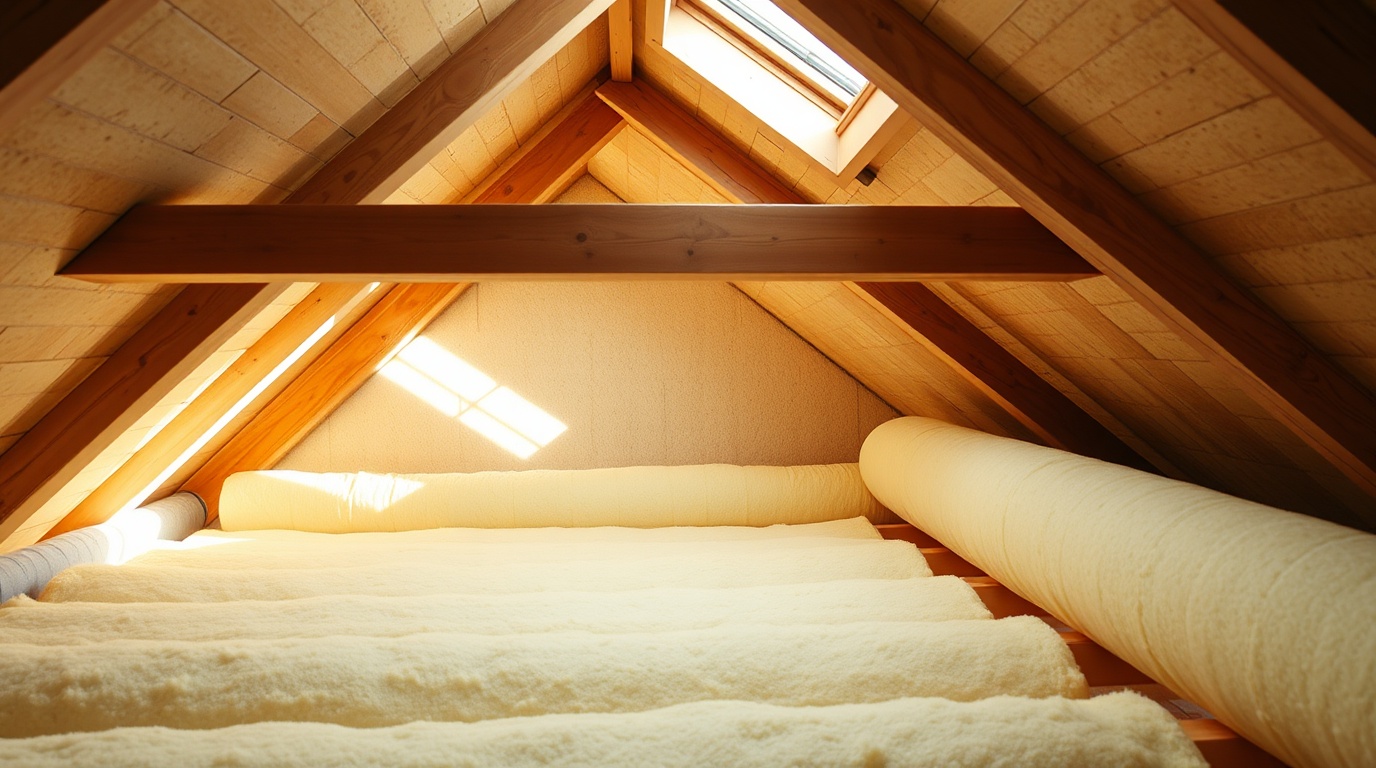
The short answer
Yes — a standard cold loft needs to stay ventilated after it's insulated, and insulating it correctly actually makes ventilation more important. When you lay insulation over the ceiling, the loft above becomes colder (the heat is now kept downstairs), so any moist air that reaches it is more likely to condense on the cold roof timbers. The defence is airflow: vents at the eaves (and sometimes the ridge) draw outside air through the loft and carry that moisture away before it settles. The classic mistake is pushing insulation tight into the eaves, which blocks the vents and traps moisture — leading to condensation, damp and eventually timber rot. So the rule is simple: insulate to 270mm, but keep the eaves gap clear so air can still flow, using ventilation trays at the edges if needed.
Ventilation and insulation work together in a cold loft. Adding insulation without protecting the airflow is one of the most common — and most damaging — loft mistakes. Here's why it matters.
Loft ventilation basics
- Cold loft needsventilation kept clear
- Main ventsat the eaves (sometimes ridge)
- Why colder = riskiermore chance of condensation
- Common mistakeinsulation blocking the eaves
- Fixkeep eaves gap / fit rafter trays
Why insulating makes ventilation matter more
Before insulation, heat leaking up from the house keeps a loft relatively warm, which tends to keep the roof timbers above the dew point. Once you insulate the ceiling to 270mm, that warmth stays downstairs where you want it — and the loft above gets noticeably colder. Colder surfaces are exactly where water vapour condenses. So the very act of insulating, while excellent for your bills, increases the risk that moist air reaching the loft will condense on the cold roof timbers and underside of the roof.
Households generate a lot of moisture — cooking, washing, drying clothes, breathing — and some of that vapour migrates upward through the ceiling. In a well-insulated, poorly ventilated loft, that moisture has nowhere to go and settles on the cold timber. Over time this causes damp patches, mould and rot, which is far more expensive to fix than the insulation ever saved. Ventilation is what stops this happening.
How a cold loft is ventilated
A cold loft is ventilated mainly at the eaves — the low edges of the roof where it meets the walls. Outside air enters here, flows through the loft space, and carries moisture out, often assisted by high-level vents at the ridge or in the roof. For this to work, there must be a clear air gap at the eaves that the insulation does not block. Where insulation would otherwise be pushed tight to the edge, installers fit rafter trays (eaves vent trays) that hold the insulation back and preserve a continuous ventilation channel.
| Element | Role |
|---|---|
| Eaves vents | let outside air into the loft |
| Ridge / high-level vents | let moist air out at the top |
| Rafter / eaves trays | stop insulation blocking the airflow |
| Clear eaves gap | keeps the ventilation path continuous |
General guidance for a cold-roof loft; the correct detail depends on the roof. Source: Energy Saving Trust, NHBC / Building Regulations guidance.
Cold loft versus warm roof ventilation
The ventilation requirement applies to the common cold-roof arrangement, where insulation is at ceiling level and the loft above is cold. A warm roof — where insulation sits at rafter level for a usable loft room — is handled differently: it either keeps a ventilated air gap above the insulation, or uses an unventilated build-up with a vapour control layer and the correct membranes. Either way, the underlying principle is identical: moisture must not be allowed to condense on cold roof timbers, whether by venting it away or by keeping it out of the construction.
For the typical job of topping a loft up to 270mm, the practical message is short: do the insulation, but don't seal the loft. Keep the eaves clear, fit ventilation trays where the insulation reaches the edges, and don't block any existing vents. A well-ventilated insulated loft stays dry and performs for decades; a sealed one quietly traps moisture against the roof. If you ever see damp staining or mould appear on the underside of the roof after insulating, treat it as a ventilation problem to investigate, not something to ignore.
It is worth being clear about why the cold-roof approach is the default for an ordinary loft rather than the warm-roof one. A cold roof is simpler, cheaper and more forgiving: the insulation lies flat on the ceiling, the loft above is vented to the outside, and any small amount of moisture that gets up there is carried away by air movement rather than trapped in the structure. Because the timbers stay cold but dry, the arrangement tolerates the odd imperfection — a slightly under-sealed hatch, a minor gap — without failing. A warm roof, by contrast, asks much more of the detailing: the insulation has to be continuous against the rafters, the membranes and any vapour control layer have to be correct and properly lapped, and either a clear ventilated gap or a designed unventilated build-up has to be maintained for the whole roof to stay sound. Get it slightly wrong and moisture can be sealed inside the construction, where it is far harder to detect and to fix. That is precisely why a warm roof belongs to a designed loft conversion done by a competent professional, while the everyday job of insulating a cold loft to 270mm is something most homes can have done quickly and safely — provided the one golden rule, keep the eaves clear, is respected.
Signs your loft ventilation isn't working
Because a ventilation problem develops quietly, it pays to know what to look for, especially after a loft has been insulated or topped up. The earliest and most common sign is condensation on the underside of the roof — droplets of water, a sheen of dampness, or frost on the felt and nail tips on a cold winter morning. Left unaddressed, that moisture leads to the next stage: black mould spotting on the rafters, sarking felt or the top of the insulation, and a musty smell when you put your head into the loft. In more advanced cases the timber itself darkens, softens or shows fungal growth, which is the point at which a cheap ventilation fix has become an expensive repair.
Several things commonly cause it, and most are correctable. The classic is insulation blocking the eaves, sealing off the air inlet — the fix is to pull the insulation back and fit eaves trays. Another is a bathroom or kitchen extractor venting into the loft instead of to the outside, which dumps large volumes of warm wet air directly onto the cold roof; the duct must run to an external vent, never terminate in the loft. New, more airtight roofing felt on a re-roofed house can also cut the incidental airflow older roofs relied on, sometimes needing added vents. And simple gaps at ceiling level — an unsealed loft hatch, downlighters, pipe runs — let far more moist air up than people expect. If you spot the early signs, treat them as a prompt to check the eaves are clear, confirm any extractor ducts exit the building, and look for obvious ceiling gaps, rather than waiting for the timber to suffer.
It also helps to separate a problem that needs action from the harmless dampness many lofts show briefly in cold snaps. A light, occasional film of condensation on the coldest winter mornings that clears as the day warms is common and not usually a concern on its own; what matters is whether moisture is persistent, whether it is pooling or running down the timbers, and whether mould or staining is spreading rather than static. A useful habit is to put your head into the loft on a cold, still morning a few weeks after any insulation work, and again after a spell of wet weather, and simply look at the nail tips, the felt and the rafters near the eaves where airflow is weakest. If those areas stay dry, the ventilation is coping; if they are repeatedly wet while the rest of the loft is dry, the eaves inlet is the first thing to check. Catching it at the condensation stage is a matter of pulling insulation back or adding eaves trays — a job of minutes — whereas leaving it until the timber softens can mean structural repair. The small habit of looking is worth far more than it costs, and it is the single most reliable way to make sure the bill savings from a well-insulated loft are never quietly undone by hidden damp above your head.
Frequently asked questions
Does an insulated loft still need ventilation?
Yes. Insulating the ceiling makes the loft above colder, which increases the chance that moist air will condense on the cold roof timbers. Ventilation at the eaves carries that moisture away, so the airflow must be kept clear — never block the eaves vents with insulation.
What happens if loft insulation blocks the ventilation?
Trapped moist air condenses on the cold roof timbers, causing damp, mould and eventually timber rot. This is a common and costly defect. Keeping a clear eaves gap, or fitting rafter trays where the insulation reaches the edges, prevents it.
What are eaves trays for?
Eaves or rafter trays hold the insulation back from the edge of the roof so a continuous ventilation channel is kept at the eaves. They let installers insulate fully without sealing off the airflow that a cold loft needs to stay dry.
Sources & further reading
Figures on this page are typical UK ranges drawn from published sources and depend on your specific loft. They are guidance, not a quotation.